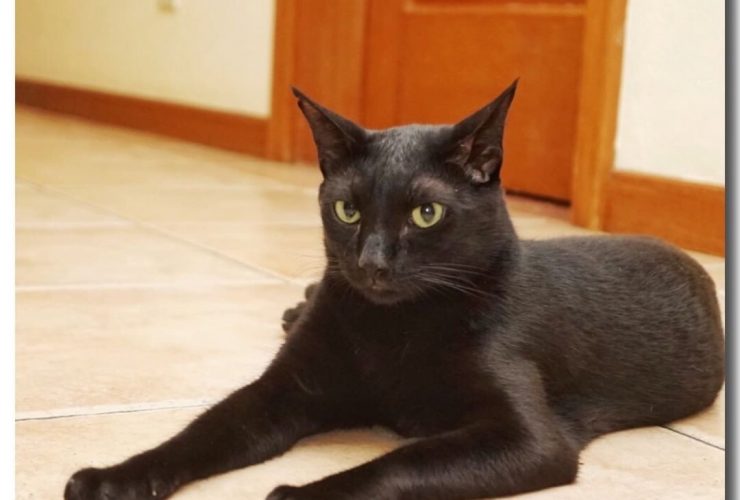

Kitty Tips: Hydration
Having a household with a many cats means we have to have a lot of everything to keep tensions down. We have an abundance of comfy beds, window hammocks, high shelves, litter trays. And we have a lot of water vessels.
To encourage my kitties to drink water, I invested in water fountains 5 years ago, and we have plenty of them. Inside the house, where there are 11 residents, we have 4 fountains scattered around in various locations. PLus the “naughty boys”, Harper, Finn and Valentino have their own fountain in their room, as does Kai in Lyn’s room.
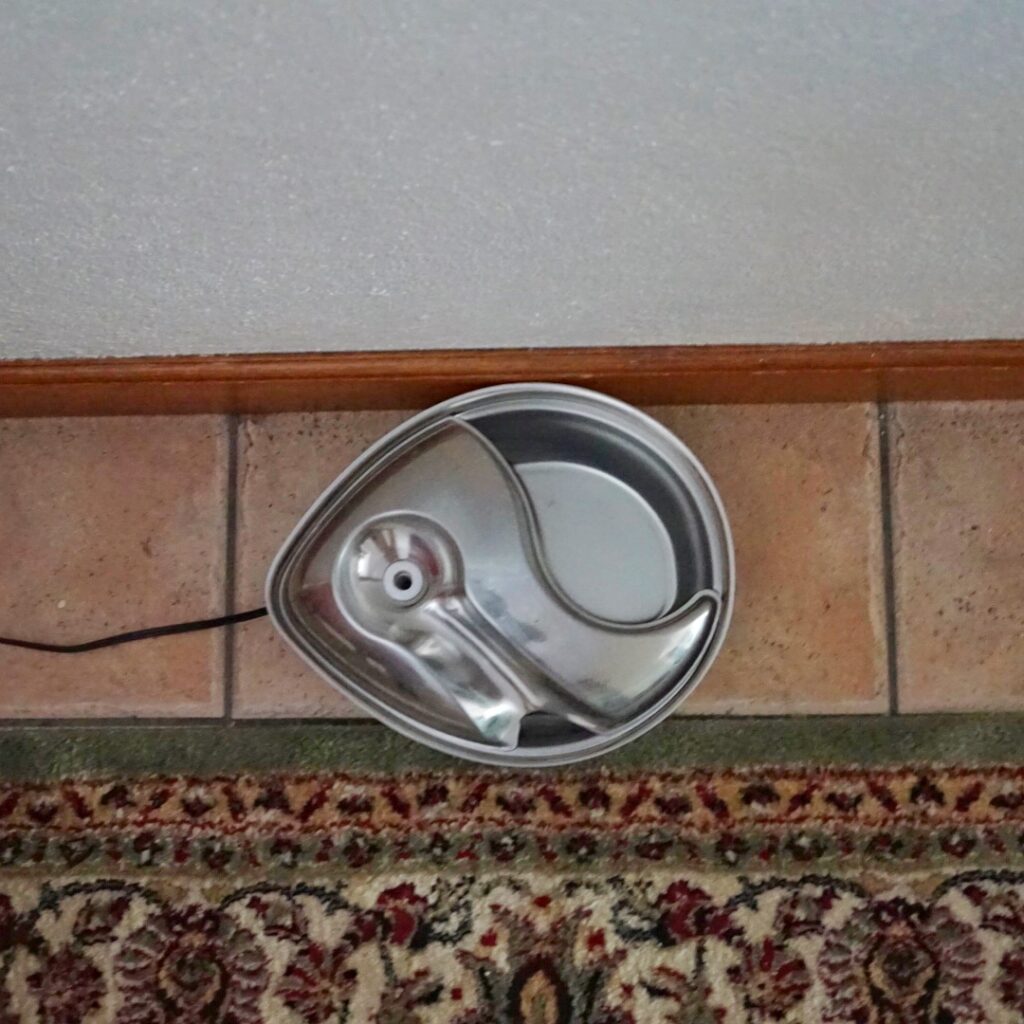
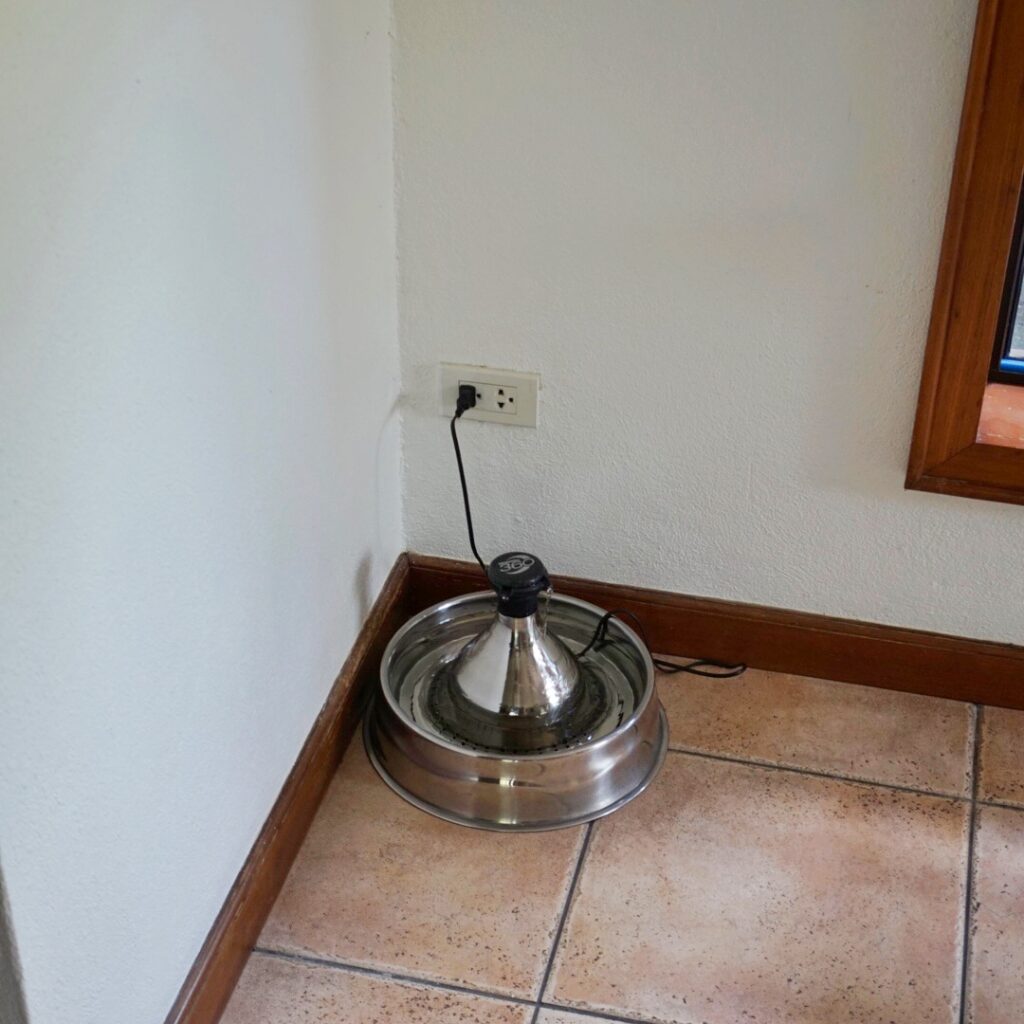
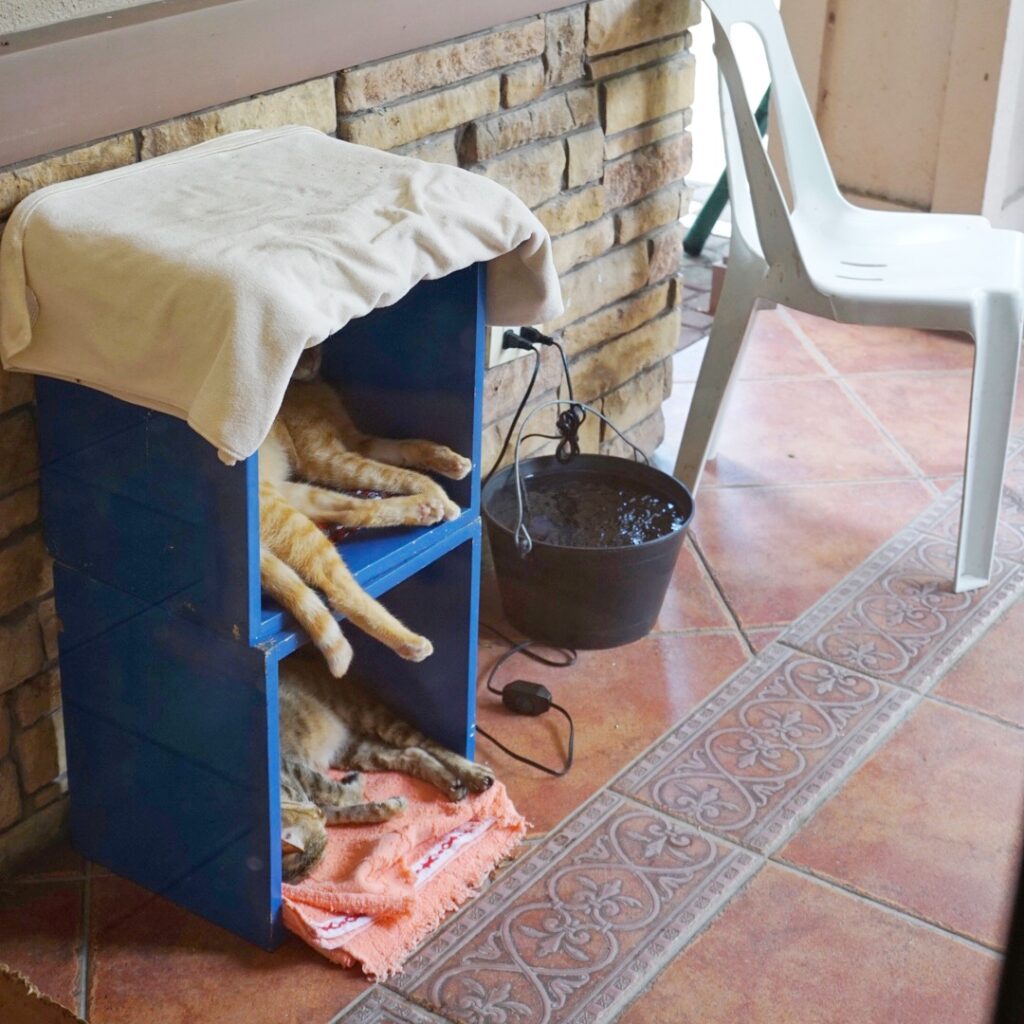
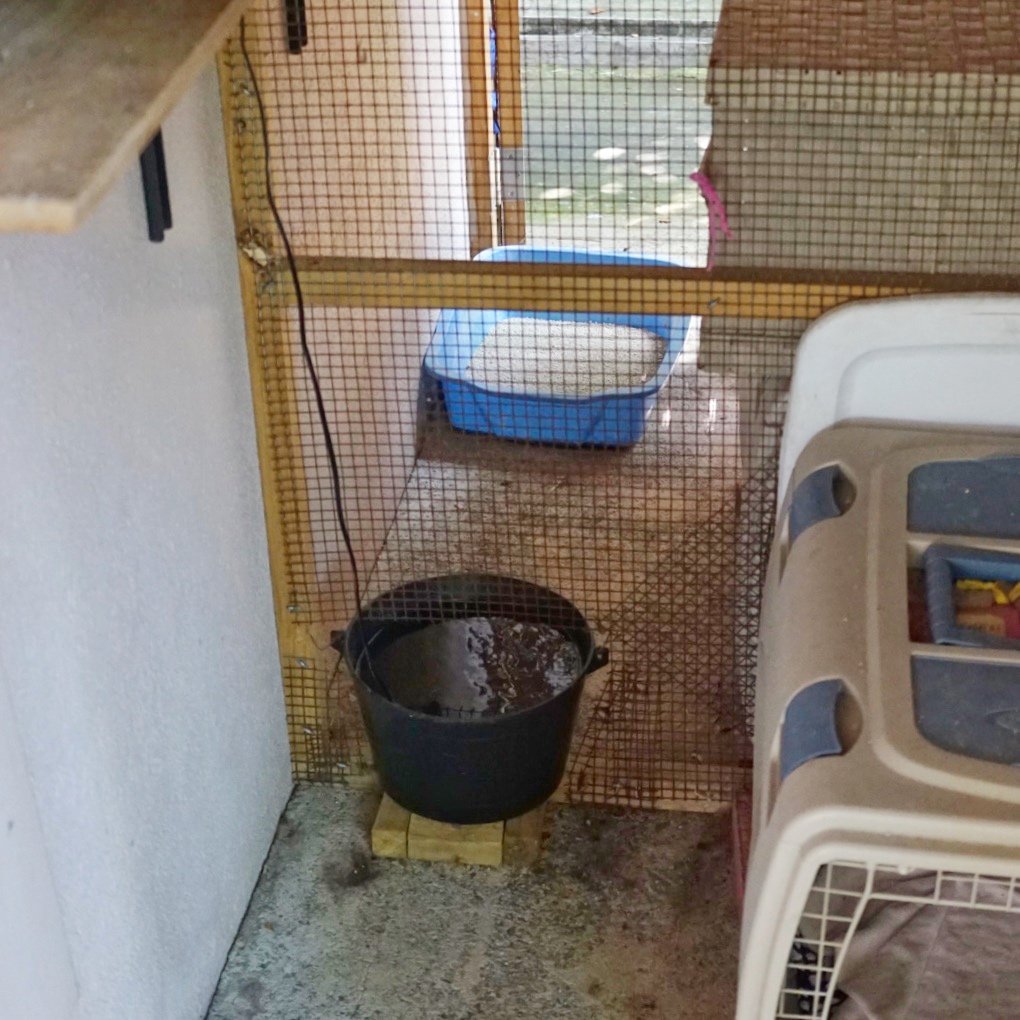
Outside, we have buckets (more below). In our back garden there is one, and out the side and front, where 10 resident or visiting strays hang out, we have 3. There’s also a bucket that’s shared between two catios for the cats that are secured overnight, and a fountain in the storeroom outside where Mama Luna and her crew sleep overnight. Yes it’s a lot! But you would be amazed to see how much my kitties drink. Every day I would see every cat slurping at a bucket or fountain for an extended period, at least once per day.
Hydration is important in cats, as it is in humans. If your cat is dehydrated, it can indicate a serious underlying condition, so having a sense of your kitty’s drinking habits is important.
These are my top tops for keeping your cat hydrated:
- Use a water fountain. Running water implies fresh water rather than stagnant. Having moving water in my house has been a game-changer for getting my cats to drink. Our fountains are topped up daily, cleaned weekly, and the filter was changed every two weeks, though during the pandemic when supplies are inconsistent, we’ve slipped that to 4 weeks with no ill effects. A lower cost alternative to a fountain is a bucket with a small aquarium pump in it. This water isn’t filtered and it doesn’t need to be “bubbling”, just a little stir of movement is enough. Our buckets are topped up daily and skimmed of any debris on the surface, and cleaned weekly. It makes me so happy to see stray cats drinking from our buckets! Local water here has all sorts of parasites within.
- As I described above, have water available in several locations. If you’ve ever had a peeing problem with cats, you’d know that sometimes a cat, or small kitten, won’t travel from point A where she is sleeping to point B where the litter tray is, if that distance is very far. Just like we want to make it as easy as possible for a cat to use a litter tray, we want to make it as easy as possible for them to access fresh water.
- In the wild, an animal might consider water that is near to a kill to be contaminated, so it won’t drink that water. For this reason, keep food and water separate. It might be tidier in our houses and more convenient for us to have food and water bowls next to each other, but it may not be best for your kitty.
- Many cats are addicted to dry biscuits and won’t eat wet food. Dry biscuits are good for teeth and jaws, but bad for hydration. If your cat only eats dry biscuits (kibble) you’ll need to work doubly hard to ensure he gets plenty of water. Ideally your kitty will have a wet meal every day.
- If your kitty eats wet food, you can also spike this with water, tuna water or chicken broth. Start with a teaspoon, stir it through and increase to whatever your cat will tolerate. Oh, and try to do this out of the view of your cat. When you add water or medicine to your cat’s food, don’t let them see you do it – they get suspicious if they see us messing with their sustenance and may get picky about eating it.
- Make tuna water or chicken broth for your kitty. Drain a can of tuna – must be water packed, not oil. Dilute the liquid to stretch the treat out a bit further – I usually do 1:1 tuna: water or sometimes as much as 1:4. Sometimes I’ll add more water to the drained tuna and let it sit for a day and drain again. Serve as a liquid treat, or freeze in ice cube trays. I then pop a frozen cube into a bowl and add a little water to get it melting, then serve. If you make chicken broth to do the same, don’t use onions or garlic as these are harmful to cats.
- If you don’t have a fountain or bucket, try using different size and shape water bowls for your cat, and periodically move them to new locations. This will spark curiosity and they may sample from each new bowl. A friend leaves plastic mugs of water around, because her cat always tries to drink from her glass!
In my house all the fountains are metal, and when we use bowls, we use metal or ceramic. The outside buckets are unfortunately plastic, but this is not my preference. Some kitties suffer from cat acne, which manifests as tiny blackheads around the chin. The most common cause is bacteria left on plastic surfaces, which irritates them. If your cat has blackheads on his chin, try rubbing firmly once per day with a cotton ball soaked in Witch Hazel. I did this for Pip when he was younger. He quite enjoyed it, and the acne was gone in about 2 weeks.